
What is the full phrase for 'GmbH', and what do the words in this acronym mean in English?
In Germany, there are two types of companies: publicly traded and privately held.
The acronym 'GmbH', which is written after the name of the company, designates a company as private in Germany. The letters stand for Gesellschaft mit beschränkter Haftung which, translated literally, means a 'company with limited liability'. GmbH companies are incorporated and, as such, are legal entities unto themselves. These companies must have a minimum of two partners and may be, but do not have to be, owned by a public company.
German companies that are publicly traded are designated as such by the letters 'AG' after the company name. 'AG' is an abbreviation for the German word Aktiengesellschaft, which literally translates to 'corporation' in English.
The laws of a country determine which types of companies are legally recognized within the country's borders. One of the most commonly used acronyms is 'PLC', which is used throughout the United Kingdom to indicate a Public Limited Company, or a company that is publicly traded with owners having limited liability. Throughout the world, 'S.A.' is used to indicate a privately held company, though its meaning varies depending on the country in which the company is registered. The words translate broadly as 'anonymous society' in English.


Sunday, December 26, 2010

GOOGLE CHROME OS
GOOGLE CHROME OS
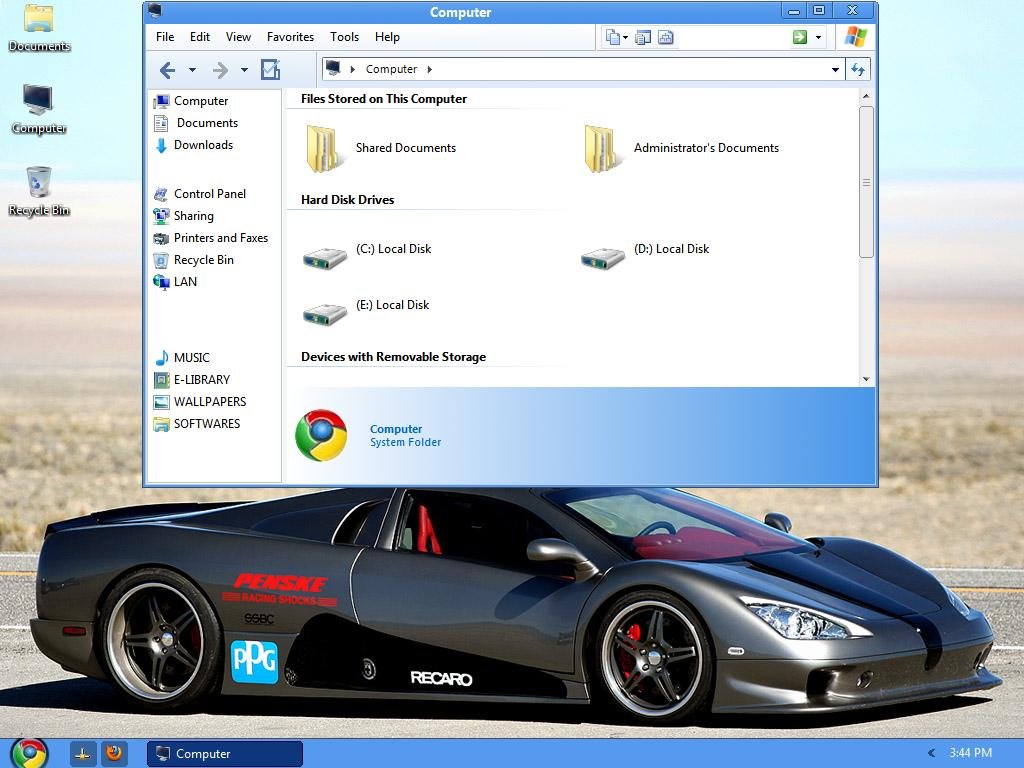
SAN FRANCISCO: What if nearly everything you usually keep on your computer — photos, documents, music and software — was stored online? Your machine would be speedier and perhaps less vital because you could simply use another machine to recoup your digital life should you lose your laptop.
This premise — somewhat scary, yet liberating — is behind Google Inc.'s upcoming Chrome OS, which will make notebook computers more like netbooks than most actual netbooks.
The software powering Chrome OS, which is based on the search giant's eponymously named browser, serves mainly as a tool for connecting your computer to the Web. That's where nearly everything you use is housed and linked to your Google username and password. It's a concept known as cloud computing.
A peek at the upcoming operating system and its vision of cloud computing shows a promising idea that could make computing faster and more convenient. But it still needs a lot of work.
Google expects the first computers powered by Chrome OS to be released this summer, and initially they'll be made by Acer Inc and Samsung Electronics Co.
For now, though, Google is operating a pilot for some individuals and companies to test an unbranded laptop that runs Chrome OS. The company lent The Associated Press one of these machines, which aren't going to be sold to the public.
The laptop itself, called the Cr-48, doesn't really deserve to be critiqued, because it is a stripped-down machine that is chiefly a frame for Google's OS oeuvre. The shell is entirely matte black plastic, without a hint of branding. It has a webcam, a screen that is about 12 inches diagonally and a full-sized keyboard with a search key in place of the caps lock key.
The machine also has 16 gigabytes of flash memory for storing files, if you feel absolutely compelled to download something. Downloads are obviously discouraged, though; my music collection alone would nearly fill this allotment.
Moving on to the main event, Chrome OS brings a few clear benefits: Starting up the notebook takes just seconds — roughly 13 of them, according to my stopwatch — and waking the closed notebook from "sleep" mode is as quick as opening it up (almost too quick, as the notebook couldn't regain its wireless service quite as fast). By contrast, my Windows machine at work takes more than two minutes to boot up.
After you sign in with your Google account, the same username and password you would use to access Gmail, you can pull up a home page showing all the apps you've installed from the Chrome Web Store. Assuming you're connected to the Web, you can just start using apps and surfing the Web right away.
There were plenty of free and paid Web apps and browser extensions available when I tested the notebook. Some are only for the Chrome OS; others also work with Google's Chrome Web browser for other computers.
I installed a range of the free ones, some of which seemed to be just links to existing Web pages. The apps I snagged included Web-based office suite Google Docs, the chatting service Google Talk, Aviary's Advanced Image Editor and balloon-popping puzzle game Poppit.
As with smart phones and tablets such as Apple Inc iPad, publications are also making Chrome apps. USA Today, The New York Times and The Wall Street Journal are among them.
On my work computer, it can take ages to open up applications that are stored on my hard drive. With the Cr-48, I could immediately start editing a Google Docs spreadsheet or tweak the colors in a photo using Aviary because the programs are all running online. I only needed a strong Internet connection.
Surfing the Web was a pretty normal experience, with most websites loading speedily, though the Cr-48 was not that good at displaying Flash videos.
But I felt constrained because I had to use the lone browser that comes with the system and the Web-based apps I obtained. Apps loaded slowly when my Internet connection wasn't stellar. This wouldn't be a problem with programs stored on a regular computer's hard drive.
If a Chrome OS-based laptop becomes my primary computer, a data plan would be a must.
I feel anxious just thinking about the possibility that I couldn't access my documents at any time, and I don't even keep anything that important on my own laptop.
I mostly used the notebook with Wi-Fi at home and at the office, though I also tried out its 3G network service, which is provide by Verizon Wireless.
So what happens if you don't have any Internet access? The Cr-48 is pretty useless.
I could still write in an already-open Google Docs document, add notes in Scratchpad and look at photos I'd downloaded. But I couldn't use apps that are not yet opened because they're all connected to the Web.
If you lose your connection while using an app, you may be able to view some information that has been temporarily stored in memory, as I could when browsing The New York Times' app. But you'll need to get online as soon as possible to really use the machine. Faced with this situation, I'd probably just search frantically for an Internet connection or simply put away my laptop.
In its current state, the Chrome OS is far from ready to take over as my main computer, even if I were using it on a more powerful machine than the Cr-48.
Sure, I spend most of my time on the Web already, but I'm not quite ready to rely on having Internet access to do almost anything with my computer.
I can imagine getting comfortable with that in the not-so-distant future, though, and I'm curious to see if Google can make it happen.

PROTECT YOUR COMPUTER FROM KEY LOGGERS

Use a Good Antivirus
This is the first and basic step that you need to take in order to protect your computer from keyloggers. Use a Good antivirus such as Kaspersky, Norton or Mcafee and update it regularly.
Use a Good Antispyware
Since keyloggers are basically spywares, if you are a frequent user of Internet then you could be exposed to thousands of keyloggers and spywares. So you should use a good antispyware such as NoAdware.
Antilogger can be Handy
Antiloggers are programs that detect the presence of keyloggers on a given computer. Over past few years, I have tested a lot of anti-logging programs and have found Zemana Antilogger as the best antilogger.
Zemana
Normally a keylogger can be easily detected by a Good Antivirus program, but hackers use some methods such as hexing, binding, crypting and similar techniques to make it harder to be detected by antivirus programs. In this case Zemana Antilogger comes handy as the program is specially developed to protect your system against harmful keyloggers.

Online Scanning
When ever you receive a suspicious file, you scan it with online scanners such as Multi engine antivirus scanner which scans your file with 24 antivirus engines and reports it back to you if the file is recognized as a virus or spyware. This ensures that none of the malicious programs can escape from being detected as there are 24 different antivirus engines are involved in the scanning process.
Sandboxie
Sandboxie is another great program to help you protect your computer against harmful keyloggers and spywares. Sandboxie runs your computer in an isolated space which prevents your program from making permanent changes to other programs in your computer.
When ever you receive a file that looks suspicious, just run the program with Sandboxie so even if it is a keylogger or any other virus it will not make permanent changes to your computer system.

To run a program in Sandboxie follow the steps as mentioned below:
1. Open sandboxie and click on sandbox menu on the top
2. Now goto Default sandbox
3. Then click on run any program
4. Now select the file you wish to run in sandboxie and click open
Keyscrambler
Keyscrambler is one of the best protection against keyloggers that you can have, Keyscrambler is a small program which encrypts your typed keystrokes so even if the victim has installed a keylogger on your system, he or she will get encrypted keys. Keyscrambler currently supports Firefox, Internet explorer and other applications, however its premium version supports more than 160 applications.
IT EYES HIGH GROWTH
IT EYES HIGH GROWTH

BANGALORE: It's been a happy 2010 for the tech industry. It ushered in glimpses of recovery, while the second half of the year brought in growth,hiring and resilience, pumping in a sense of confidence back to the markets which were shattered by the global economic meltdown.
The highlight was the revival and the resilience it showed. IT companies posted good numbers clearly signalling that the risk of a double dip recession emerging and disrupting growth are now behind us. Besides, hiring plans and increments were back on board, demonstrating the feel good in the sector.
So while 2010 was characterized by restructuring, consolidation, pragmatic learning and smart budgeting, 2011 will continue to build on that and move ahead, say industry experts. "The outlook for 2011 is positive and promising and innovation would be the key going forward," they said.
Kris Gopalakrishnan, CEO of Infosys Technologies, says, "The year 2010 brought us out of the recession. Growth is back, hiring numbers have picked up. Next year, the focus will be on innovation around emerging technologies like cloud computing and various mobile technologies.
On the business side, companies will focus on new geographies, new industries and new ways of engaging clients." It's not going to be limited to new technologies though. Avinash Vashistha, CEO of Tholons Inc, says verticals like retail, healthcare and BFSI were key growth drivers during this year and these spaces will continue to remain sunshine sectors throughout the year ahead as well. "We expect IT and BPO sectors to grow in 30% and 20% range respectively. The outlook is positive for large players."
There is a word of caution for small and medium companies though. Vashistha says small and medium enterprises were not able to participate in the growth story of 2010 and their future will continue to be grim in 2011 too.
"That's why we see certain companies like i-gate are trying to quickly gain some weight and size," he said. Arup Roy, senior reserch analyst at Gartner India, echoes similar sentiments: "Though the industry is on a positive footing there are clear trends emerging that marginal players could face tough times and we can thus expect more consolidation next year.
According to Siddharth A Pai, managing director, TPI, 2010 was an year of recovery and restructuring of the markets and existing contracts. "Many large 5/7 year deals were restructured and re-negotiated and large Indian service providers were able to win some of these contracts this year.
Next year will bring in some incremental growth in such contracts won by domestic providers. That means more work will flow offshore, to India and other low cost destinations in 2011, which is good news."
Innovation truly is key to going forward in 2011. In the product front, it will be about the point of design having an impact as a business advantage in architecture, engineering and construction and manufacturing spaces.
"Customers today are no longer asking us if they should use a model-based design approach but how innovative solutions can help them solve challenges of creating sustainable designs, meeting the growing demand for infrastructure, and operating in a productive and profitable manner.
Similarly for the manufacturing sector and the vast number of SMEs in the segment in India, good design is connecting ideas and innovation; turning those ideas into a real inventions," says Jayant Keswani, head marketing, Autodesk India & SAARC.
On the end-user front, 2010 saw two fundamental shifts—mobile phones became more well rounded in terms of features/functionality across segments and the smart phone platform moved from being a privilege of the elite to more mainstream. As a result, users consumed a lot more infotainment services like music, email, and life enhancing services at the rural level. 2011 will be about smartphones demand soaring driven by 3G launch.
"Companies are investing in building a strong services portfolio and ecosystem partnerships across services whether it is infotainment or business productivity services for enterprises and SMBs or life enhancing services for rural and non urban consumers," says V Ramnath, director , operator channel, Nokia India.

BANGALORE: It's been a happy 2010 for the tech industry. It ushered in glimpses of recovery, while the second half of the year brought in growth,hiring and resilience, pumping in a sense of confidence back to the markets which were shattered by the global economic meltdown.
The highlight was the revival and the resilience it showed. IT companies posted good numbers clearly signalling that the risk of a double dip recession emerging and disrupting growth are now behind us. Besides, hiring plans and increments were back on board, demonstrating the feel good in the sector.
So while 2010 was characterized by restructuring, consolidation, pragmatic learning and smart budgeting, 2011 will continue to build on that and move ahead, say industry experts. "The outlook for 2011 is positive and promising and innovation would be the key going forward," they said.
Kris Gopalakrishnan, CEO of Infosys Technologies, says, "The year 2010 brought us out of the recession. Growth is back, hiring numbers have picked up. Next year, the focus will be on innovation around emerging technologies like cloud computing and various mobile technologies.
On the business side, companies will focus on new geographies, new industries and new ways of engaging clients." It's not going to be limited to new technologies though. Avinash Vashistha, CEO of Tholons Inc, says verticals like retail, healthcare and BFSI were key growth drivers during this year and these spaces will continue to remain sunshine sectors throughout the year ahead as well. "We expect IT and BPO sectors to grow in 30% and 20% range respectively. The outlook is positive for large players."
There is a word of caution for small and medium companies though. Vashistha says small and medium enterprises were not able to participate in the growth story of 2010 and their future will continue to be grim in 2011 too.
"That's why we see certain companies like i-gate are trying to quickly gain some weight and size," he said. Arup Roy, senior reserch analyst at Gartner India, echoes similar sentiments: "Though the industry is on a positive footing there are clear trends emerging that marginal players could face tough times and we can thus expect more consolidation next year.
According to Siddharth A Pai, managing director, TPI, 2010 was an year of recovery and restructuring of the markets and existing contracts. "Many large 5/7 year deals were restructured and re-negotiated and large Indian service providers were able to win some of these contracts this year.
Next year will bring in some incremental growth in such contracts won by domestic providers. That means more work will flow offshore, to India and other low cost destinations in 2011, which is good news."
Innovation truly is key to going forward in 2011. In the product front, it will be about the point of design having an impact as a business advantage in architecture, engineering and construction and manufacturing spaces.
"Customers today are no longer asking us if they should use a model-based design approach but how innovative solutions can help them solve challenges of creating sustainable designs, meeting the growing demand for infrastructure, and operating in a productive and profitable manner.
Similarly for the manufacturing sector and the vast number of SMEs in the segment in India, good design is connecting ideas and innovation; turning those ideas into a real inventions," says Jayant Keswani, head marketing, Autodesk India & SAARC.
On the end-user front, 2010 saw two fundamental shifts—mobile phones became more well rounded in terms of features/functionality across segments and the smart phone platform moved from being a privilege of the elite to more mainstream. As a result, users consumed a lot more infotainment services like music, email, and life enhancing services at the rural level. 2011 will be about smartphones demand soaring driven by 3G launch.
"Companies are investing in building a strong services portfolio and ecosystem partnerships across services whether it is infotainment or business productivity services for enterprises and SMBs or life enhancing services for rural and non urban consumers," says V Ramnath, director , operator channel, Nokia India.
LATEST FRESHER OPENINGS
Subscribe to:
Posts (Atom)


